



 ldakers
Why Art Galleries Use Red Dots.
Very few gallery owners know the origin of this practice. The red dot first appeared decades ago in galleries around the world and are placed next to artworks to show when a painting or artwork has been sold. Some use a red marker, others a small circular red sticker.
Although the origins of this practice remain mysterious, some trace it back to the mid-1800s, when red stars began to blossom next to artworks sold in London. Over time, the star became a circle. Despite this, some claim that it is an American tradition started in the 1960s.
The art market is constantly changing and, as a result, the way galleries sell their work has also changed over the years, and the use of the little red dot is being lost over time.

Why is this? It could be because the red dot can be seen as intrusive or distasteful by many in the art world. Red dots are disappearing to make way for more discretion. Collectors don’t always want their purchases to be made public by an eye-catching red dot, especially if the sale had a huge price tag.
GOOD TO KNOW: At art fairs, some galleries do not use red dots to make it easier to start a conversation with a potential client. A similar work can be offered instead, and engage the client. The red dot can create unconscious mind blocking.
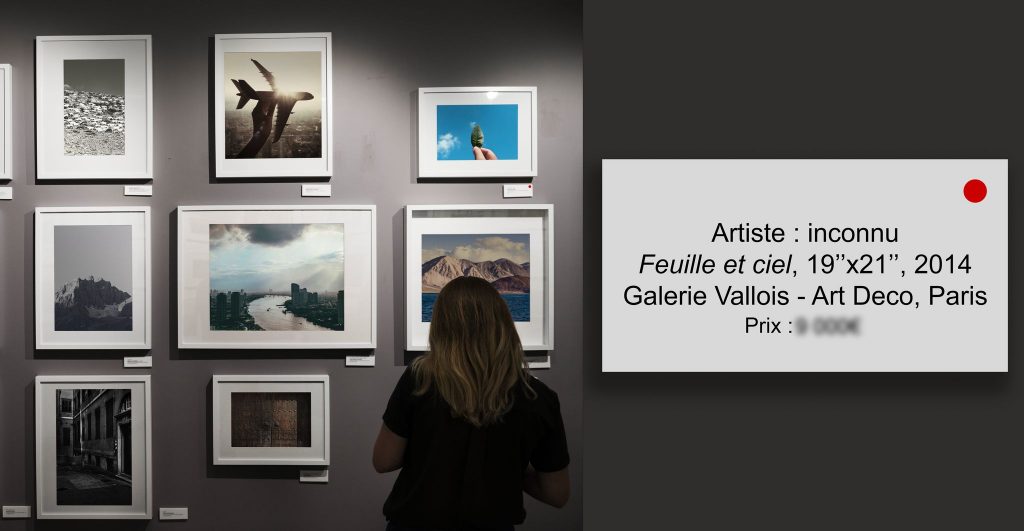
If a work of art has a red dot, it is sold and will be taken down in the near future. The painting or sculpture is still visible to visitors because works purchased by private collectors may never be seen by the public again. It is therefore advantageous for an artist to keep his or her works on display long enough for the public to appreciate his or her talent and creativity.
Despite the presence of the red dot, do not hesitate to ask the gallery owner. A similar work by the same artist may be available in reserve, or the artist may even accept commissions to produce a similar work for you. For works that are part of a “limited edition”, copies of the same series may also be available.
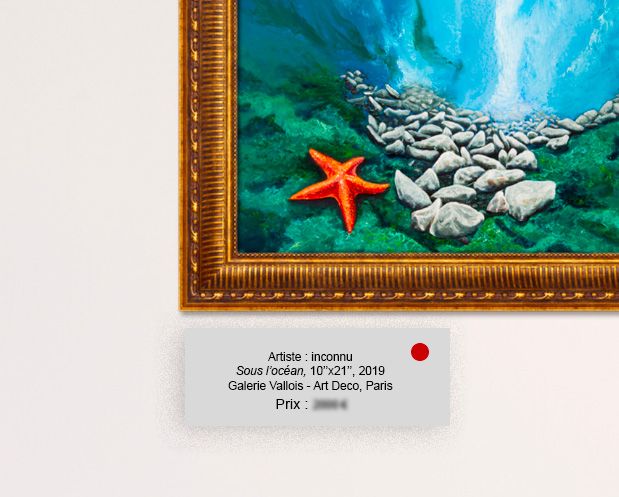
Why Do You Need To Use A Red Dot ?
- To quickly show that the artwork is unavailable or already sold. Artworks held in the artist’s personal collection may also be marked with a red dot, suggesting that the piece of art was never available for purchase. (These works should be marked as NFS – Not For Sale – rather than displaying a red dot).
- Show that an artist is selling well and in demand
- Allow the sold artwork to remain visible until the end of the exhibition
- Create an urgency among buyers
- Encourage sales through the presence of red dots
- Initiate a reward process for the artist concerned and his gallery owner
- Provide more transparency on the success of an exhibition
- Maintain the coherence of works within an exhibition. The red dot prevents the premature removal of sold works that could compromise the overall artistic presentation.
- Keep the sold work on display until the buyer is ready to take possession.
GOOD TO KNOW : These products are currently available at GreatArt Online or in the art supply shop in London Shoreditch..
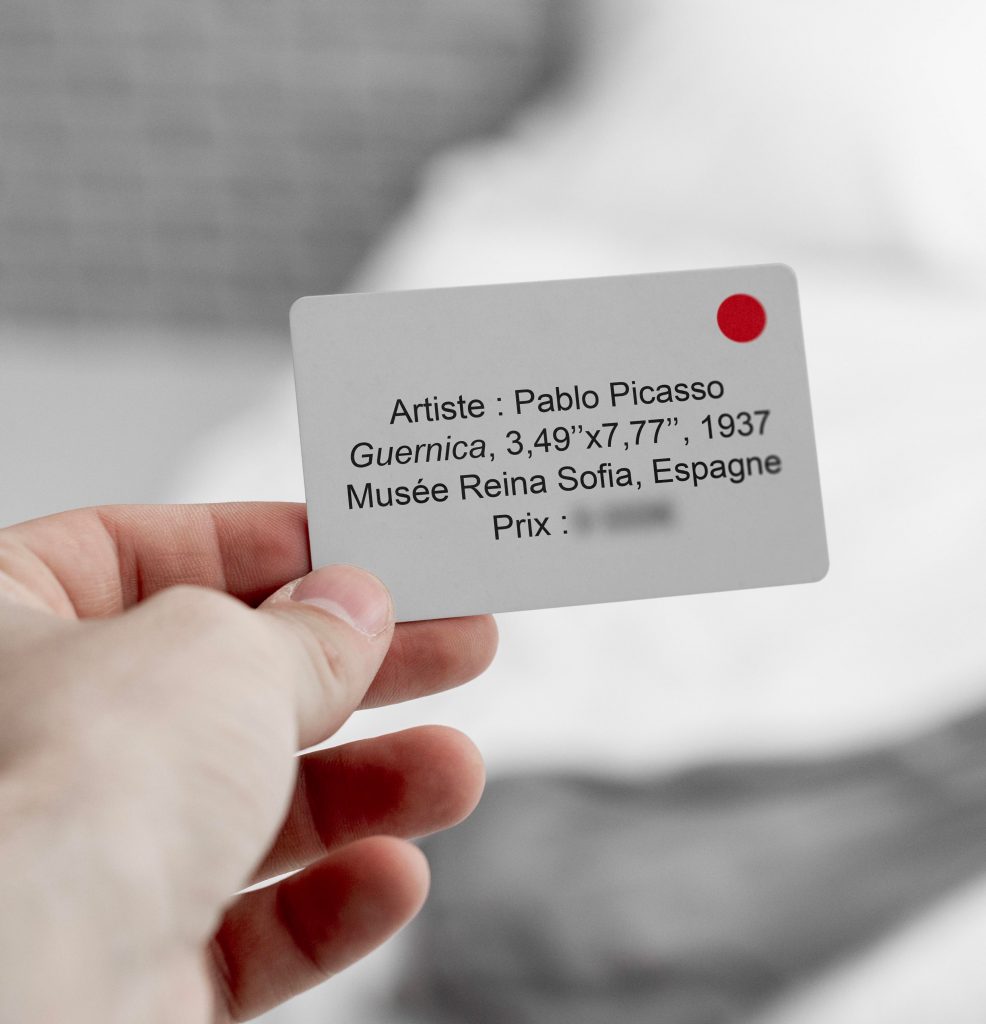
Red Dots & Other Colours
Over the years, dots have changed their colours:
- A YELLOW DOT means that the artwork is reserved for 24 hours.
- A GREEN DOT (or half a red dot) means a “pending” work, reserved, not fully paid. This means that the work may become available for sale again if the potential buyer does not complete the purchase. But a half red dot next to a sculpture can also mean that another one is available in the same edition.
- SEVERAL RED DOTS in tag price represent several sold prints.
GOOD TO KNOW : Some art galleries put works on hold, others do not. If you like a work but are not sure whether to buy it, ask the gallery owner if he or she would be willing to put the work on hold for a short period of time until you come back to the gallery for confirmation.
And When There Is No Red Dot At All?
Artists or art dealers can work also very well without red dots.
In these situations :
- The gallery owner then removes the sold artwork from the wall and hangs another one.
- The gallery owner removes the tap price
- The gallery owner simply writes “SOLD”
- Lack of red dots increases the chances of being contacted about the availability of a new work of art.
I hope this article has helped you to better understand the art world and especially its habits and customs ?

Content provided by Amylee Paris
The passion of Amylee, fine artist and author is to share her paintings between galleries, art collectors and her community. Amylee is also recognized as one of the most influential French artist-entrepreneurs. Since 2009 she has mentored thousands of visual artists guiding them to thriving their art career.
You can visit her colourful portfolio,follow her on Facebook and Instagram, or find all Amylee’s posts published in GreatArt online Magazineby clicking here!





Add comment