


 ldakers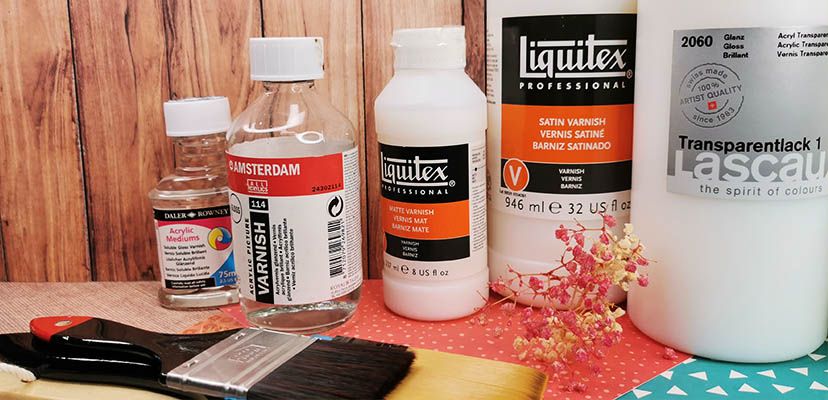
Differences Between Retouch Varnish And Permanent Varnish
Are you looking for information on artist’s varnishes, and advice that will make it easier for you to tell the differences between temporary varnish and permanent varnish?
Here’s how to choose the best varnish for your project.
ARTIST’S VARNISHING
This will seem obvious to experienced artists, but for those who are new to the joys of varnishing, it is important to remember that varnish is always applied to a completely dry and clean painting, and that it is applied to the entire painting in one go. Never varnish a painting in the following way: one part one day and then the next day the other part.
The varnish is applied with large Spalter brushes (with a very wide brush), horizontal and vertical cross strokes that cover the entire surface of the painting. Don’t panic, as it dries, the varnish will become rounder and all the scratches left by the brush hairs will disappear.
However, be careful not to over brush too much on the areas of fresh varnish, because as soon as the varnish starts to pull, it will come off and risk creating visible deformations after drying.
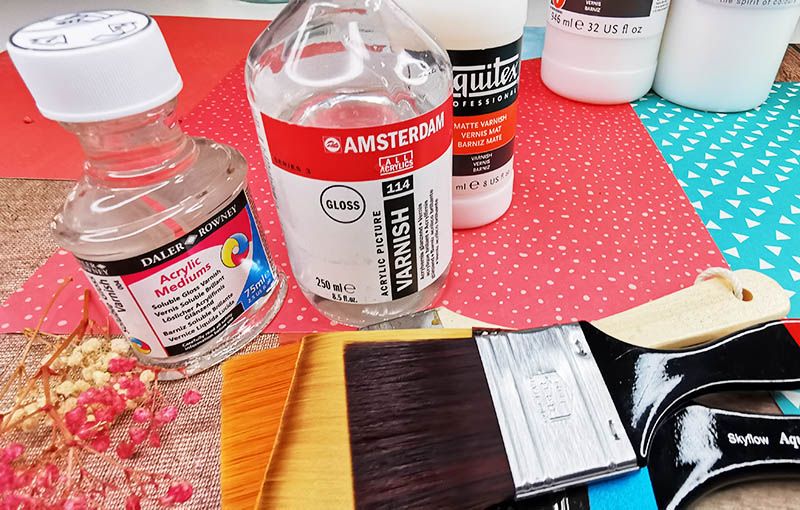
GOOD TO KNOW: To varnish acrylic paint, I prefer solvent-free varnishes that make it easier to clean brushes with soap and water.
PROFESSIONAL VARNISH QUALITIES
Good quality varnish is transparent and non-yellowing, it remains flexible, resistant to humidity, and provides an even sheen that meets the optical requirements sought by artists.
- Choose an anti-UV varnish to protect the colours from external aggression;
- Always apply the varnish to a painting on a horizontal surface to avoid unsightly drips;
- It is recommended to apply a varnish at an ambient temperature and in dry weather.
The quality of the brush and the fluidity of the varnish (neither too thick nor too liquid) will play a role in the success of varnishing.
3 WAYS TO APPLY THE VARNISH
- Use a spalter brush;
- Use a paint roller;
- Use a spray.
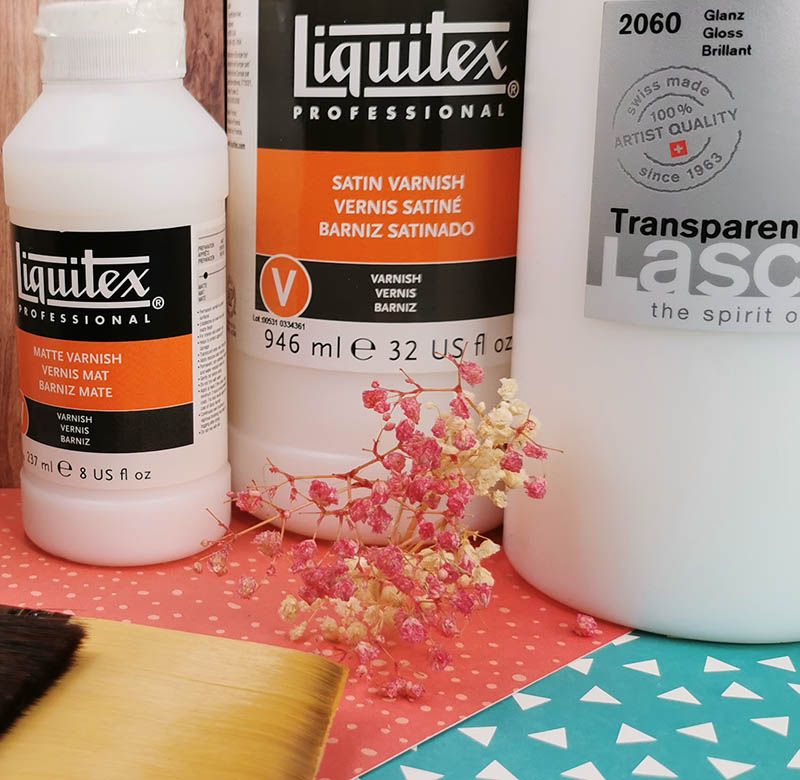
GOOD TO KNOW : These products are currently available at GreatArt Online or in the art supply shop in London Shoreditch.. You will find artist varnishes according to your needs: matt, satin, gloss, with solvent (highly odorous) or without solvent (odourless).
MEDIUM VARNISH
- Mediums that mix with the colours coming out of the tube during the creative process;
- Composed of liquid resin;
- Available in different formulas: fat or lean.
Here are some examples of medium varnishes on this link.
GOOD TO KNOW: Personally, I do not use this type of varnish with acrylic paint. If you use this medium varnish with acrylic paint, please share your experience in comments just below? I’m interested to know why?
RETOUCH VARNISH
- Temporary varnish with temporary protection;
- Composed of resin or soluble gum;
- Unifies the work and reduces embus* ;
- To enhance colours that have sunk during drying;
- Allows work to be resumed (repentance);
- Possibility of repainting over it;
- Wait for complete dryness before applying a new retouching varnish;
- Reinforces the cohesion of the layers between them;
- It penetrates the paint and nourishes areas that are too thin;
- Petroleum essence is ideal for thinning this kind of varnish;
- Does not block the drying of the paint underneath;
- The retouching varnish cannot be removed for the final varnish.
Here are some examples of retouch varnish on this link.
GOOD TO KNOW: A paint (or gilding) is said to be full of embus when its shine is dulled by the presence of matt areas in the middle of shiny ones.
Fogging indicates that the layers of paint are not dry, so varnishing should be avoided in this case. In oil painting, the difference in drying time between colour applications favours the appearance of embus.
PERMANENT VARNISH
- Also called final varnish;
- Protective and aesthetic varnish;
- Resistant to external aggressions (dirt, shocks, rubbing, heat, light, etc.);
- Exists in reversible or permanent formula;
- Revealing because it allows the paint to be highlighted;
- In the case of oil paint, wait 6 months for complete drying if the colours are diluted, or much longer if the layers are very thick.
Here are some examples of permanent varnish on this link.
PROBLEMS INVOLVED WITH VARNISH
If you do not use the varnish in the good conditions, it will send you signs such as:
- the varnish peels off the paint when applied with a brush or roller;
- the varnish does not dry and keeps a sticky feel;
- the varnish blocks the drying of the paint, which cracks or wrinkling over time.
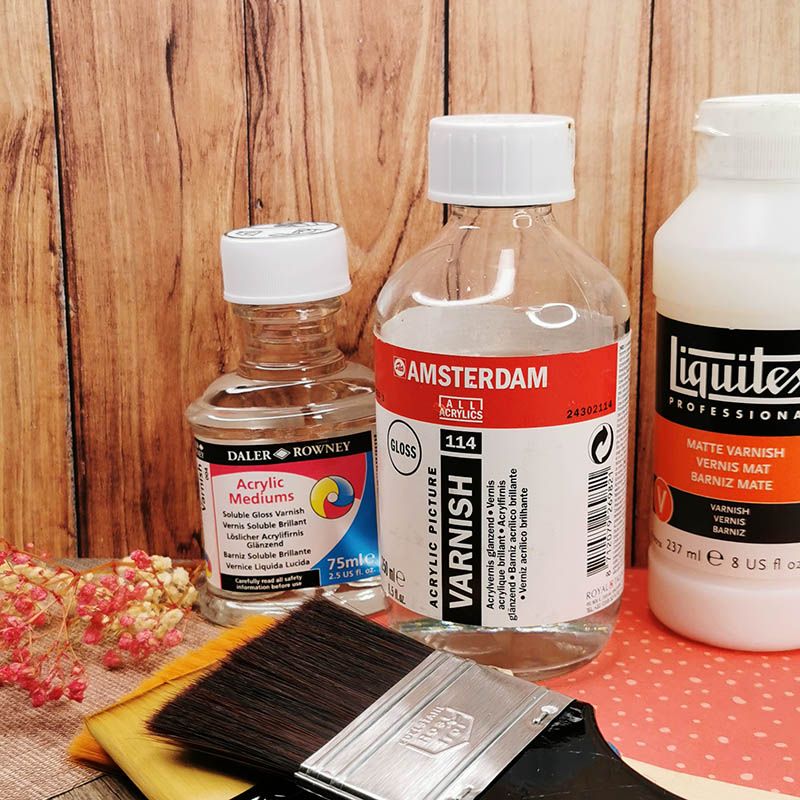
GOOD TO KNOW: To find out if you can varnish on oil paint, the test consists of delicately rubbing a small corner of the dry painted surface (or on the painted edge of the canvas) with a cloth soaked in petroleum essence. If all is well, the cloth should not stain on contact with the dry paint.
Do you use varnish for your paintings?
Feel free to share your story in the comments space just below.

Content provided by AmyleeParis
The passion of Amylee, fine artist and author is to share her paintings between galleries, art collectors and her community. Amylee is also recognized as one of the most influential French artist-entrepreneurs. Since 2009 she has mentored thousands of visual artists guiding them to thriving their art career.
You can visit her colourful portfolio,follow her on Facebook and Instagram, or find all Amylee’s posts published in GreatArt online Magazineby clicking here!





Add comment