


 ldakers
Are you looking for information to better understand the paints you use in your art studio?
It’s very simple. 3 words are enough to understand how they are made.
Continue reading below and you’ll discover the mystery of paint in one click.
3 Questions that Swirl in Your Mind?
Paint in tubes, chalk or powder… You can find everything you need to apply colour to a canvas, a paper or a wall.
• What is the paint made of in our artists’ studios?
• What are the main ingredients that make it up?
• What are the essentials to follow a good recipe and obtain a nice creamy colour?
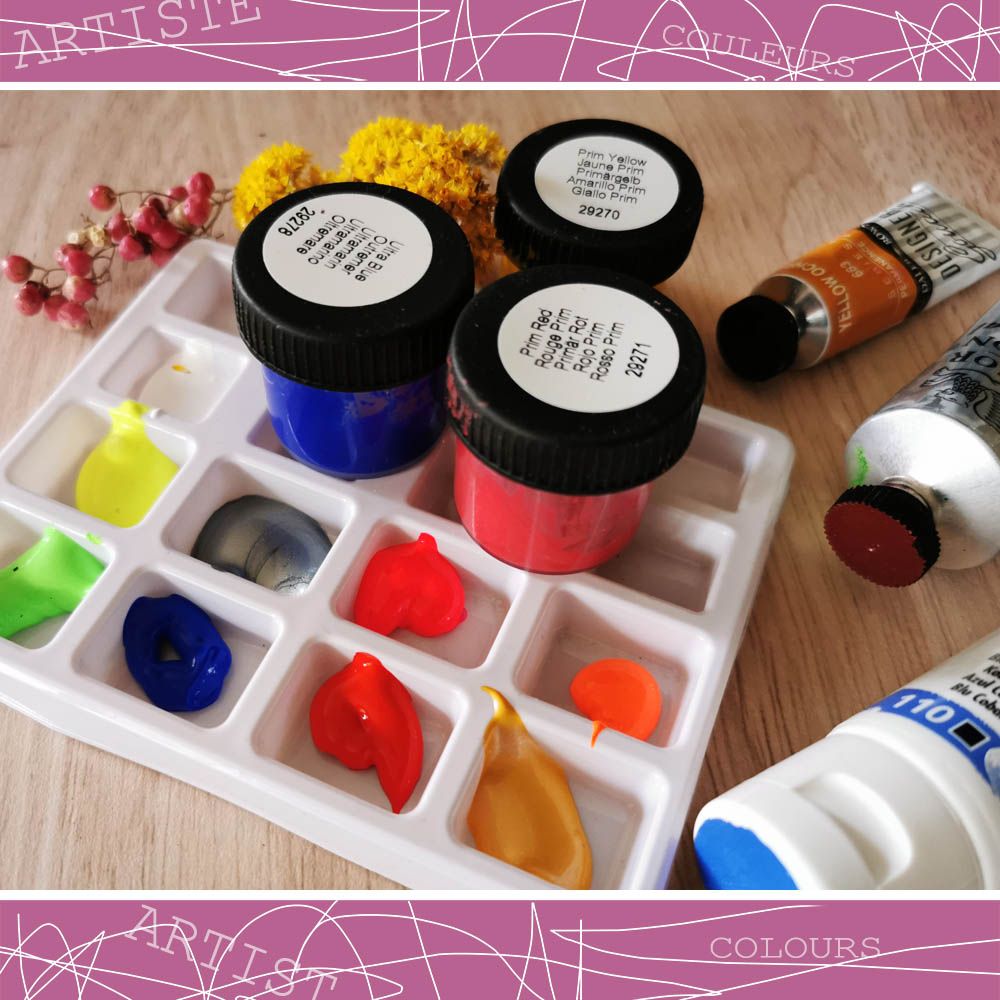
Making colours and artist’s paints (photo Amylee)
Update For The Beginning Artist
In the past, the fine artist prepared his own colour mixtures on his wooden palette in his studio. To acquire the primary colours, he usually bought them from nature or from the paint merchant or even from the chemist.
In 2022, easy solutions exist and the artist no longer needs to prepare the colours before starting to paint – unless he wants to do so, of course.
NOTE TO THE ARTIST
For artists starting out in the art world, it is always good to talk about the fundamentals of painting. These notions are not always learned at school or over the years they have been lost in the meanders of our memory. So today, this article is a little update just for them!
Of course, advanced people or experienced artists can skip it or click on another topic. I am not going to teach you anything new here.
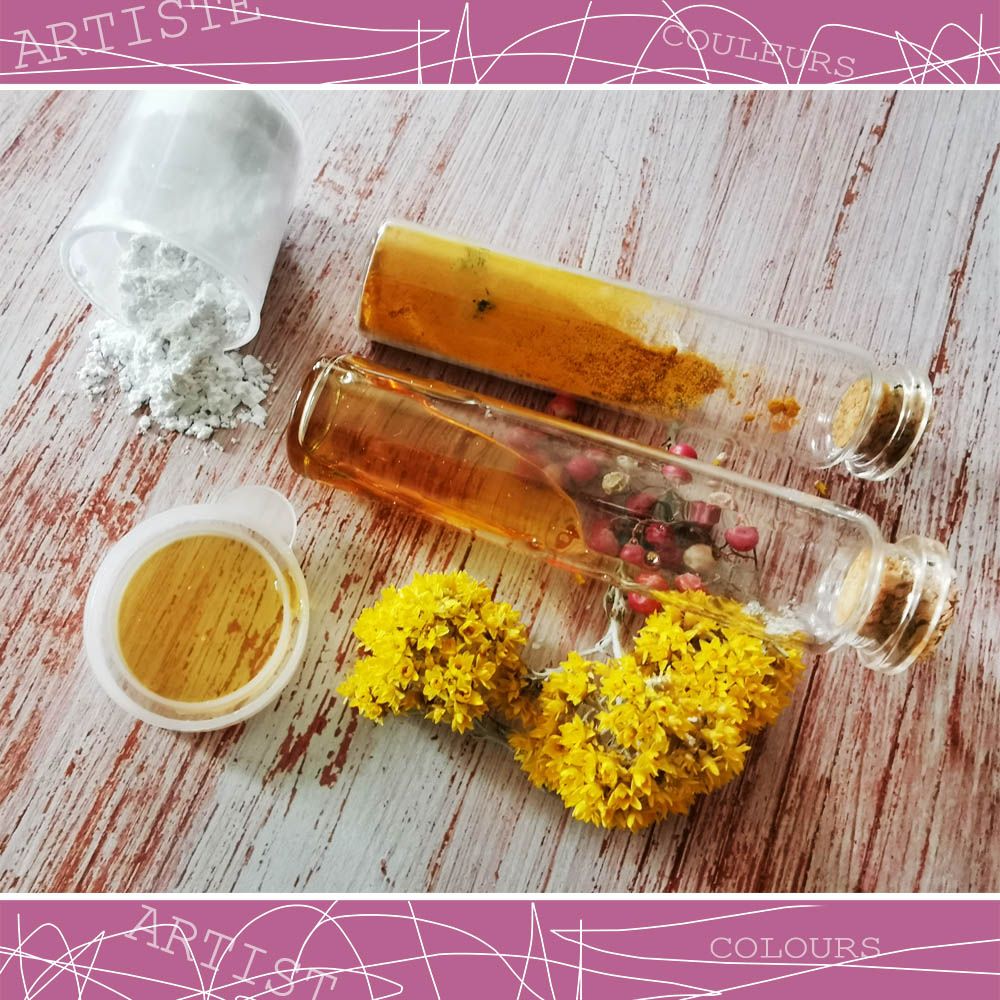
The 3 elements that make up artists’ paints (photo Amylee)
The Famous Trio
The number 3 is omnipresent in nature and forms the basic structure of many phenomena and living beings. Like the triangle, the number 3 allows for union and balance. Interesting as a principle because we also find it with its 3 essential components which constitute the paint: pigment, binder, filler (and Additives).
1,2,3, here we go!
The 3 Ingredients of The Anatomy of Paint
THE PIGMENT – The shade
Pigments are natural or synthetic substances composed of fine insoluble particles that are added to paints or varnishes to colour them.
Do you know the different sources of pigments?
- mineral pigment (ochre, sienna, lapis lazuli, cadmium),
- animal pigment (cochineal, murex, deer antler)
- plant pigment (woad, safflower, madder, turmeric, lichens, charcoal)
- metallic pigment (gold, copper, silver)
- synthetic pigment (obtained by thermal or chemical reaction)
GOOD TO KNOW: You can find a great range of paints in GreatArt store in Shoreditch (London) or on GreatArt.co.uk online shop.
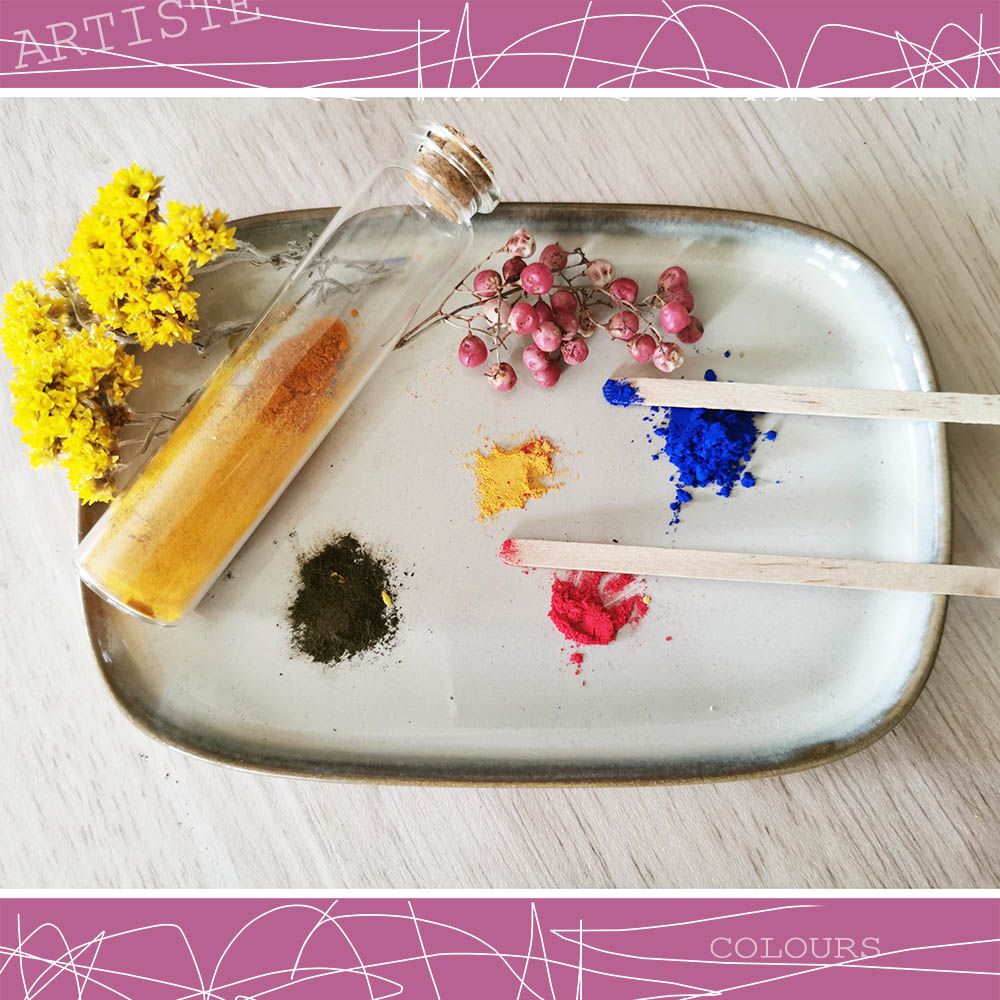
Paint pigments – Natural and synthetic (photo Amylee)
Nowadays, pigments are mostly synthetic and come from the chemical industry. They are easier and cheaper to obtain than in the past and, above all, their synthetic production makes them more durable. Unlike pigments of natural origin made from minerals or metals, synthetics contain no lead or products that are harmful to health.
The quality of the paint (fine or extra-fine), the opacity and the covering power of a colour can be changed by adjusting the fineness of the pigment grinding. The scarcity of the pigment and its grinding process (more or less long) increase the manufacturing cost and therefore the final price in the shop.
To be used in the studio and start painting, the pigment alone is not enough. The powder needs a binder and a filler to obtain a paint or ink with special properties. Artists differentiate between paint qualities by using the terms study, fine or extra-fine paints.
If you were to take away only one thing from this article, it would be this: extra-fine paint contains twice as much pigment as fine paint.
For example: if you mix an extra-fine colour with white, the mixture will lighten much less quickly than if the white was mixed with fine paint. This is logical, as extra-fine paint has a much higher proportion of finely ground pigments.
3 Brands That Offer Powdered Pigment?
Click on the links below for more details.
GOOD TO KNOW
The more single-pigment the paint, the purer they are and therefore easier to mix on the palette. Colours made up of a mixture of several pigments tend to turn because of the addition of the other pigments. The mixture will therefore be less easy to achieve. Pure pigments can be easily distinguished from coloured imitations on paint tubes by the visible indication: “tone, imitation or substitute”.
THE BINDER – The glue
Binders are also known as resins or polymers and are of natural or synthetic origin. It is usually in liquid, viscous or solid form. It provides perfect cohesion between all the components making up the paint.
Thanks to the binder (+ various other additives), the paint will take on a liquid, fluid, pasty smoothness. It facilitates the fixing and the coherence of the colours between them, but also of the paint on the support and after complete drying, the binder gives the final aspect of the work: matt, satin, gloss. Depending on the quality of the binder, it will be more or less resistant to light, sunlight, ultraviolet rays and bad weather.
- Water-based binder reinforced with the addition of honey, wax, egg or gum arabic, which after drying can be reactivated with water as with GOUACHE and WATERCOLOUR
- Binder based on synthetic polymers which reacts with water when the paint is fresh but after complete drying becomes permeable to water vapour like – ACRYLIC
- Medium-based binder (linseed oil, siccative, petrol) which, after drying, can no longer be rewetted as with OIL-based paint
- Binder based on resin + water which after drying cannot be rewetted as with ALKYDE, GLYCERO
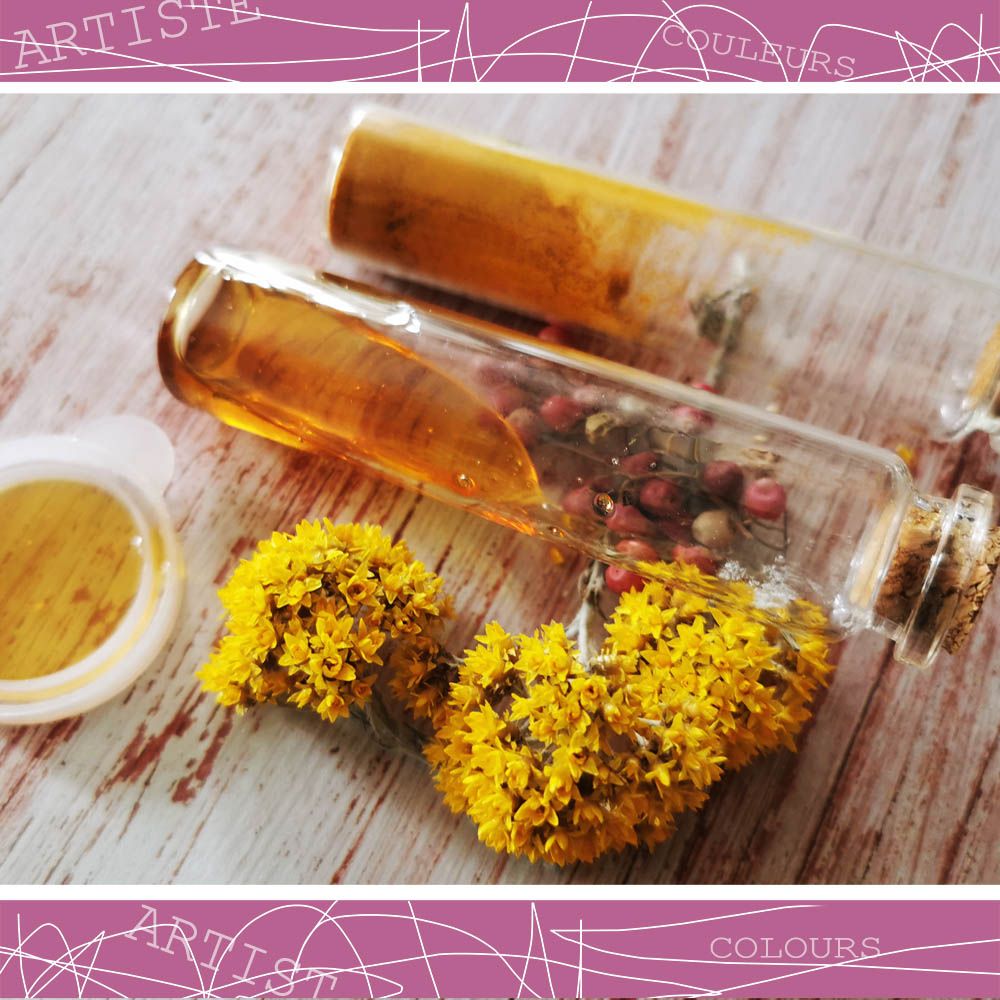
Making artist’s paint: the binder (photo Amylee)
3 Brands That Offer Binder?
Click on the links below for more details.
GOOD TO KNOW
It is the binder that determines the quality of the paint, not the pigment!
THE FILLER PAINT – The body
A filler is a white or lightly coloured mineral substance of natural origin extracted from talc, silica, slate, barite, mica, or chalk.
A filler helps to improve the chemical, physical or mechanical characteristics of a paint. For example, it provides better resistance to acids, bases and solvents once the paint has dried.
Some pigments are almost black in their pure state, so the filler can contribute to the lightening, matting and microporosity of the paint.
The purpose of the filler is to:
- thicken
- limit shrinkage and cracking
- improve strength and adhesion
- give a special aesthetic appearance
- reduce the cost of painting
Each filler plays a different role depending on the associated binder.
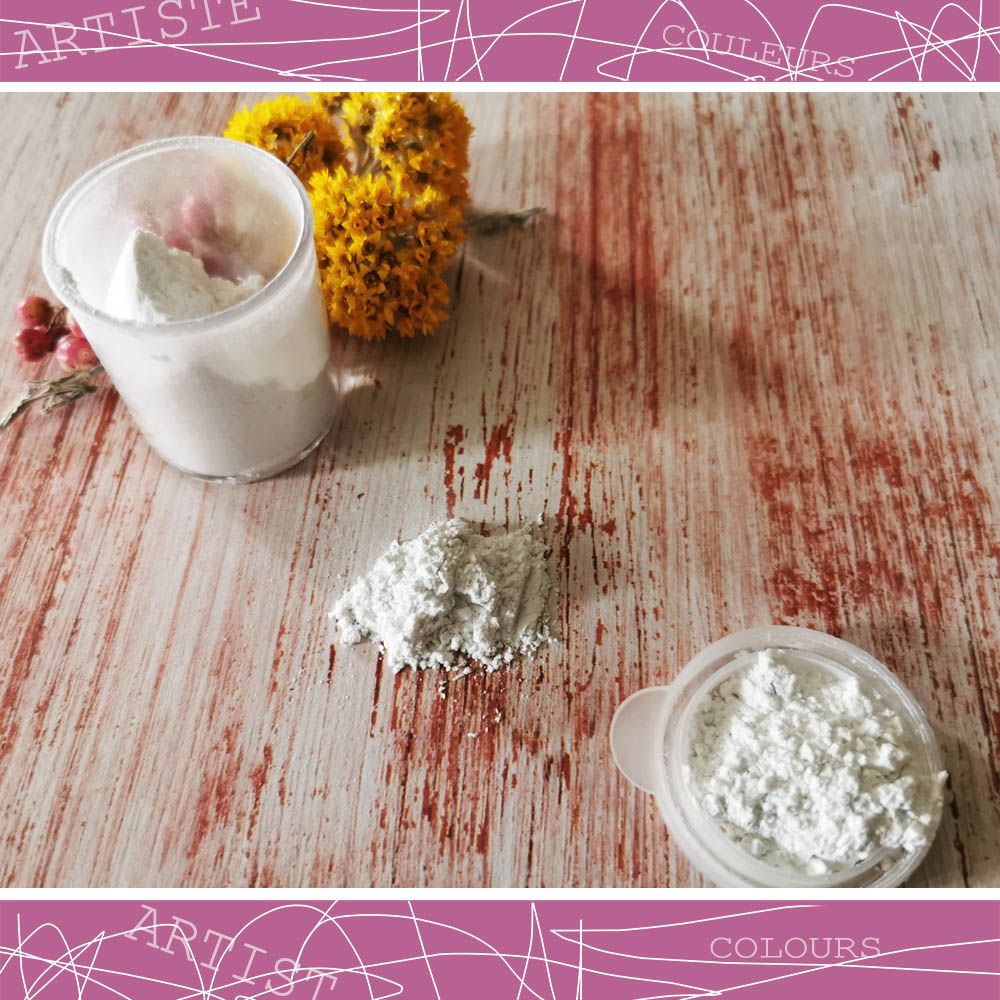
Filler Paint – Talc and Meudon white
3 Brands That Offer Filler Paint?
Click on the links below for more details.
NOTE TO THE ARTIST
A note to artists who may tell me that there is a fourth element necessary for the composition of the paint. It is true that paint can also contain additives to reinforce its characteristics.
Content provided by AmyleeParis

The passion of Amylee, fine artist and author is to share her paintings between galleries, art collectors and her community. Amylee is also recognized as one of the most influential French artist-entrepreneurs. Since 2009 she has mentored thousands of visual artists guiding them to thriving their art career.
★ ★ ★ ★ ★
You can visit her colourful portfolio, her Instagram, or find all Amylee’s posts published in GreatArt online Magazineby clicking here!





Add comment