


 ldakers
Sketchbook and Artist’s Journal | How to differentiate between them.
Have you heard of the Junk Journal or Creative Journal? What is it exactly?
If I asked you to compare
the Sketchbook to the Doodle Journal, could you easily list the differences?
You may be surprised to learn that there are a few!
How is one supposed to find their way through this flood of journals, notebooks, and artists’ books, as they are all so similar in appearance but so varied in function.
Thanks to this article, you will be able to make a more informed choice and better equip yourself at your studio. Here I wish to help you in your research.
There you go, these little books will no longer hold any secrets for you!
The Artist Diary
The diary is more a collection of notes than drawings: dated writings about specific actions, thoughts or feelings confided over the pages. The diary is a type of autobiographical writing written in the first person.
Used on a more or less regular basis, throughout an existence or a particular period, the diary is generally intended to remain secret, temporarily or permanently. As a literary practice, it is often intended for partial or total publication.
The Bullet Journal
The Bullet Journal, commonly known as the “bujo”, was invented a few years ago by Ryder Carroll, an American digital product designer. The pages of this journal are structured around a simple method of collecting and organizing different work tasks in order to be more productive and quicker on a daily basis.
The bullet journal is a kind of roadmap that combines planning with to-do lists. It reduces the mental load by planning everything that needs to be done in the next few days, months and years. The bullet journal is used to archive the past, organize the present and plan the future in the best possible way.
The Doodle Journal
A doodle is a more or less thoughtless drawing using any tool, including a biro. The hand then follows a line when our mind is usually focused on something else or busy waiting on the phone. The paper used for doodles is often thin.
Doodles are meant to show how we feel and what is on our mind at the time. It is a spontaneous drawing without any meaningful purpose. It is done lazily, carelessly or absent-mindedly.
Flowers, circles, squares, faces, abstract or random shapes, doodles are drawn on the sides of the doodle journal. They have the particularity of following an ultra-fast creative process, allowing the hand and the brain to have fun, to let go or to concentrate. The combination of writing and diagramming is an excellent idea for mental health. This “magical” process helps to streamline thoughts, better manage emotions, reduce anxiety, and retain information more intensely.
The Sketchbook
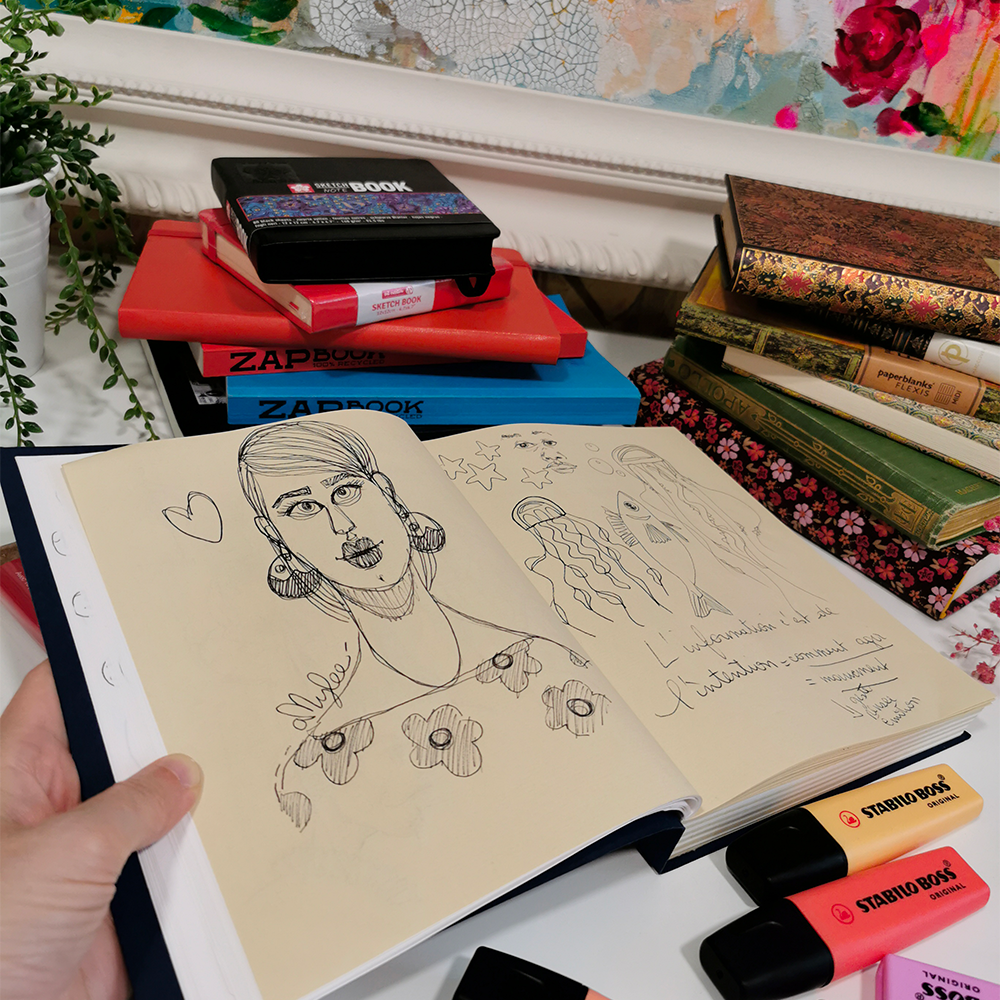
A sketch is usually an
attempt at an intended work of art. It is predetermined to capture an interior
or exterior scene before applying it as a final reference on canvas. It freezes
the present movement or paraphrases the environment on sufficiently thick
drawing paper.
Sketchbooks are personal and not intended for exhibition. They may contain
notes by the artist to complete a reflection on the moment sketched.
Sketchbooks are usually dated and are kept for life by artists. They contain not only memories in the form of diaries, freehand studies and scribbled sketches, but above all, ideas to be developed later.
The Art Journaling
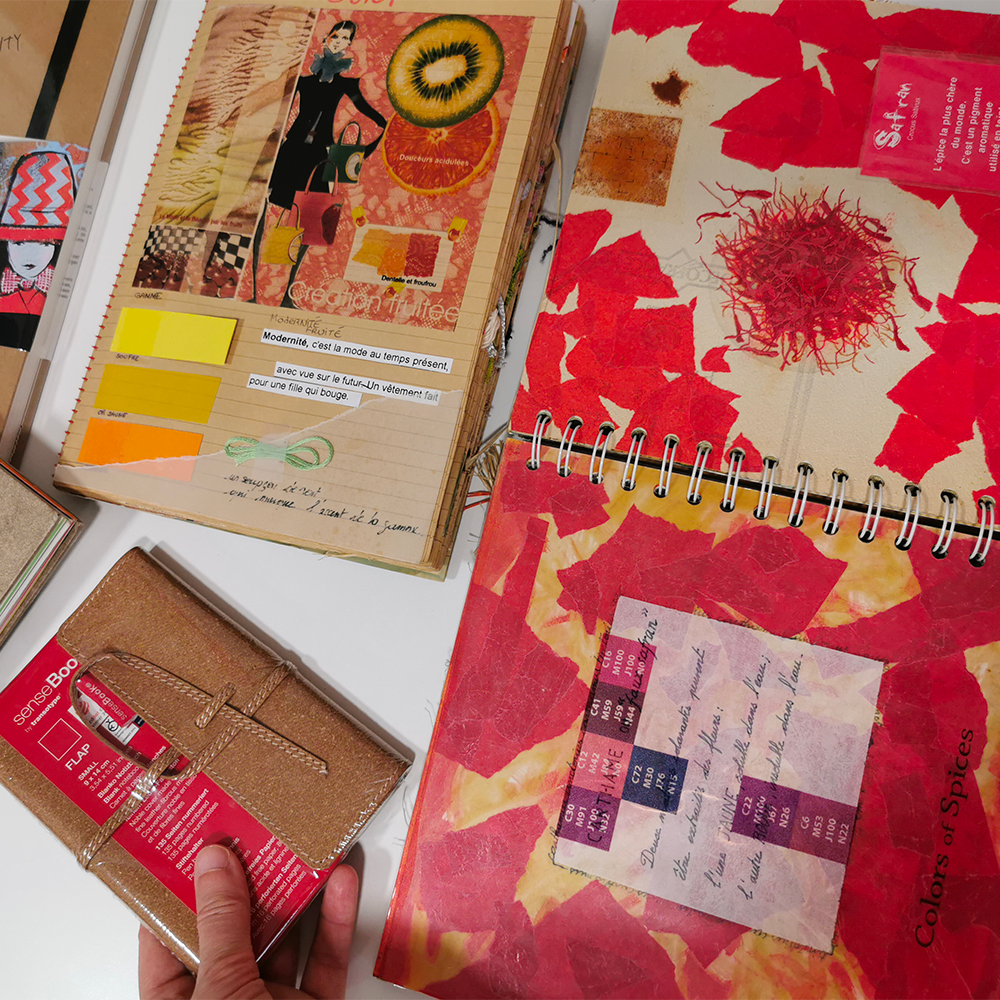
Art journaling is a dynamic approach to journaling combined with art therapy. This kind of journaling combines writing, drawing and collage in an original and innovative way to enhance the artist’s creativity.
Inspired by the decorated diary, this journal is a succession of works made using different techniques. Speaking of techniques, the most widespread in art journaling is scrapbooking, which consists of creating pages based on memories, emotions, sensations or events.
An extremely flexible tool and easy to use, art journaling can be used in a variety of ways, depending on the desires and objectives of each artist.
The Junk Journal
Junk Journal advocates the principle of not throwing anything away and transforming everything to feed the creative process. This journal is composed exclusively of recycled paper and fabrics that were meant to be thrown away: envelopes, newsprint, leaflets, used road maps, tracing paper, pages from old books or magazines, but also gift wrapping are collected to express creativity.
Once all materials are assembled and the pages are bound with thread and needle, they can be combined with scraps of fabric, lace, ribbons, stamps, stickers, stencils, etc.
Unlike the altered book (please see below), which is already bound, the junk journal is sewn together as the pages are created.
The Altered Book
If you are environmentally conscious and want to avoid over-consumption, then you can create your own book from an old unused book.
Do you know the altered book?
An excellent way to recycle all books that are lying around in our cupboards or on the tables of flea markets and attics.
There are many techniques for embarking on this adventure full of initiative and creativity: cut-out or glued pages, reuse of the cover, secret box, album or illustrations associated with printed texts…
The Dream Book
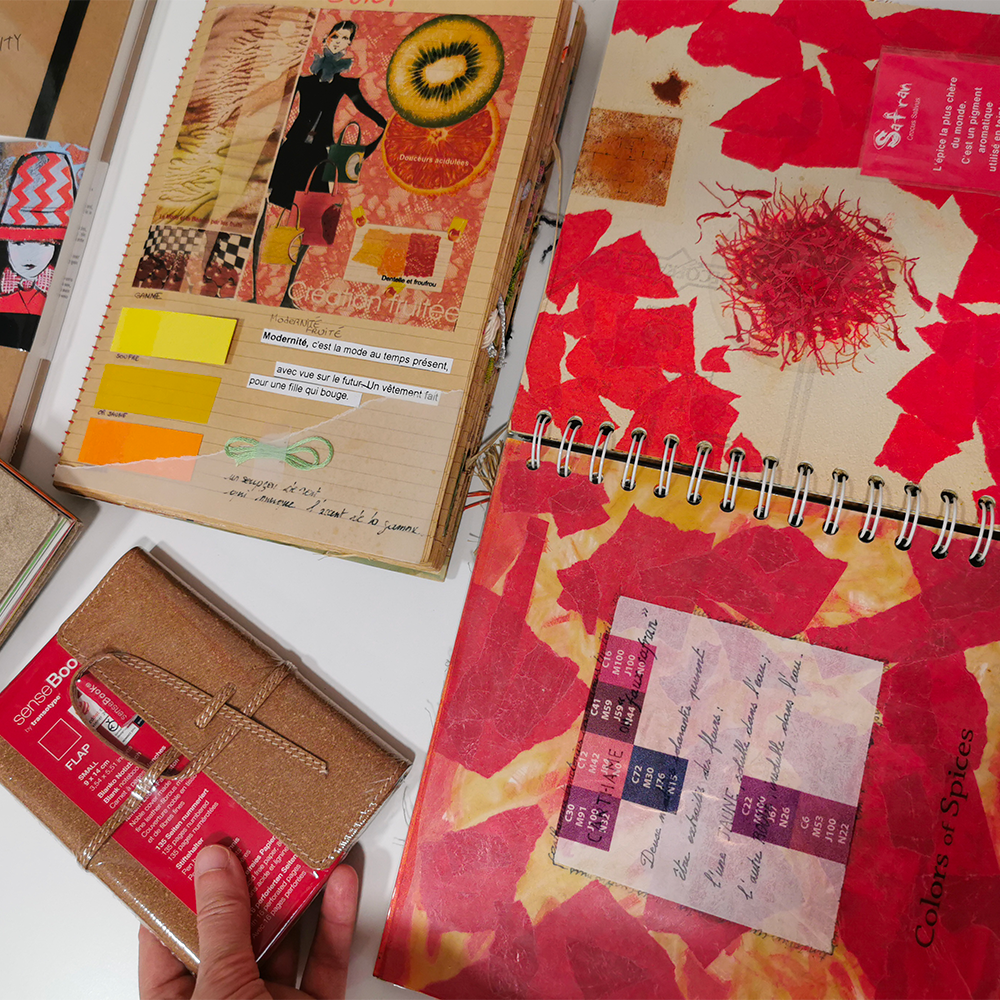
Inspired by the visualization board, the Dream Book harmonizes the mind while sending positive images, pleasant sensations, and moments of well-being to our entire brain. This book has the particularity to connect us to our mind and heart. It feels good!
In addition to boosting motivation, aligning us with our values and vibrations, the Dream Book encourages us to activate and visualize all our desires. All we have to do is imagine, project ourselves deeply and have enough patience to let the magic happen.
As the pages turn, the artist pastes images, notes messages, thoughts and positive emotions and then projections take shape. The artist becomes the hero of the story like in a comic book. These images will then become imprinted in his subconscious and influence all his decisions.
This book is also used to record his dreams when he wakes up. Writing down your dreams in great detail is also a healthy way to remember them, to free your creativity, to connect with your unconscious and to externalize all your emotions.
By regularly flipping through the pages, the artist nurtures his dreams. In this way, he accesses a modified state of consciousness that guides him in the direction he wishes to go.
The Art Book
Art book is a work printed on beautiful paper presenting the best works of an artist. The purpose of this book is to be published in a limited edition to create a “collector’s” effect, especially when the book is signed or dedicated by the artist. An autograph or signature can make the book a collector’s item and exponentially increase its value and importance.
From the writing of the book to the choice of images and the thickness of the cover, the production of an art book is always carried out by a professional publisher or printer. Regardless of the format, the art book allows you to decipher and access the creations of an artist over the course of a specific year, an exclusive artistic series, an event or a particular project. It is A beautiful album that can be leafed through without moderation, the Art Book is a tribute to an artist (between 50 and 100 pages) and allows collectors to enjoy it.
The Artist’s Book
Inherited from the Fluxus movement and conceptual art, the artists’ book is not a book about art or about an artist, it is a total work of art. Artists’ books are produced by the artists themselves: in association (group of artists), around a dialogue (writer/painter) or a solo project.
Silk-screened pages, numbered watercolours, annotated creations, artist takes the place of the publisher, constructing and illustrating the entire book.
Published in a few copies, this book becomes precious because of its rarity.
The medium of expression, explored by many artists in the same way as drawing, painting, sculpture, the artist’s book has become an art form appreciated by collectors and art galleries.
GOOD TO KNOW: You can find a great range of blank notebooks and artist’s books in GreatArt store in Shoreditch (London) or on GreatArt.co.uk online shop.
From your side
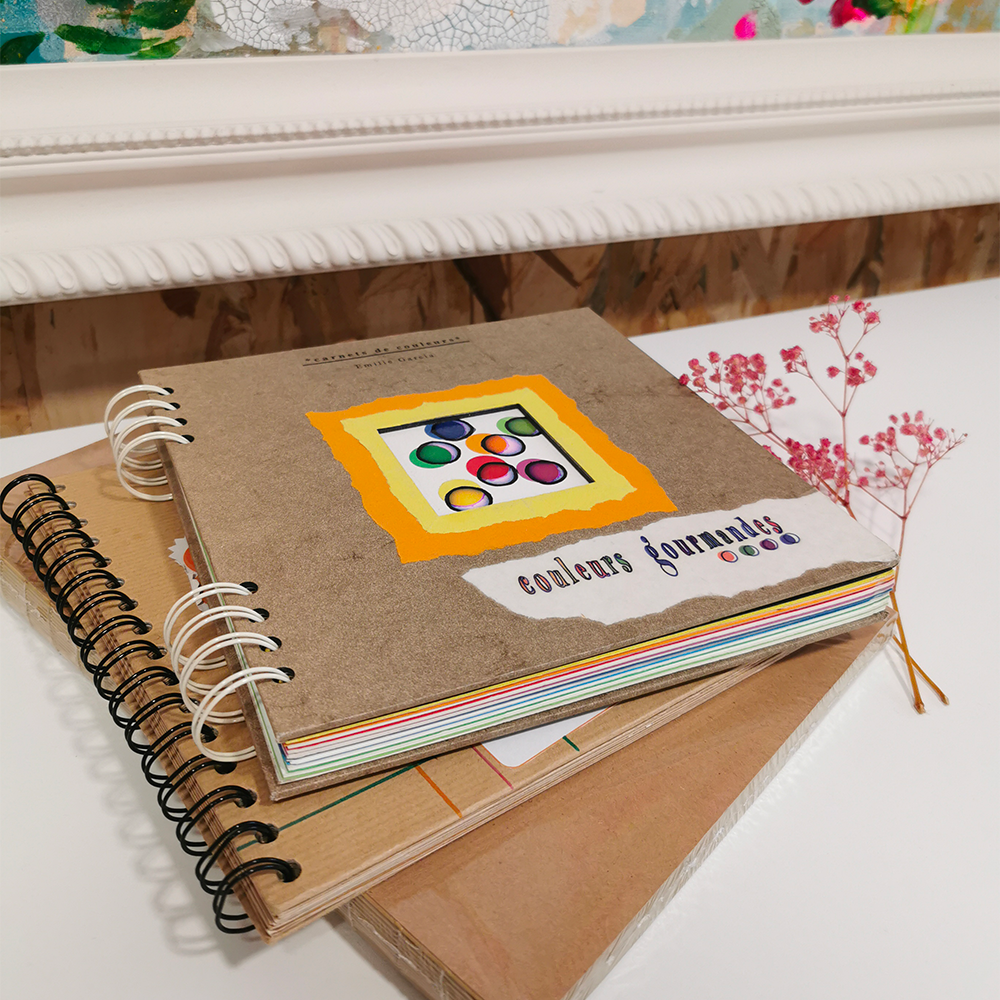
Do you use notebooks to draw, sketch, doodle, or write down inspirational phrases from your reading? Feel free to share your experience by commenting in the space below.
★ ★ ★ ★ ★
Content provided by Amylee Paris
The passion of Amylee, fine artist and author is to share her paintings between galleries, art collectors and her community. Amylee is also recognized as one of the most influential French artist-entrepreneurs. Since 2009 she has mentored thousands of visual artists guiding them to thriving their art career.
★ ★ ★ ★ ★
You can visit her colourful portfolio,follow her on Facebook and Instagram, or find all Amylee’s posts published in GreatArt online Magazineby clicking here!






Add comment