



 ldakers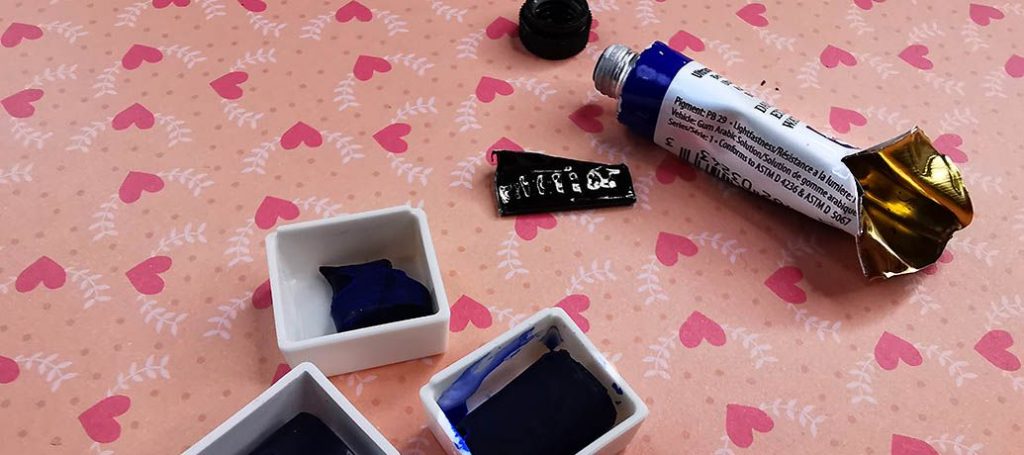
My Tips To Recycle Watercolour Tubes
At the heart of our studio, we all have the opportunity to reduce our negative impact on the planet, just by taking simple actions.
From choosing the art technique we use to what we buy, sorting waste and recycling colours, here are a few easy-to-implement anti-waste habits can make all the difference.
Old Paint Tubes Are Piling Up In Drawers?
Your leftover materials are treasures that you can reinvent. Don’t throw them away any more!
A few days ago, I did a good tidy-up of the boxes and drawers that make up my studio. I sorted out my colours and found that several tubes of watercolour were completely dry.
Oops, they were hardly used. What a great upset at the time…
As I shook the tube, I heard a very significant sound like a large stone rattling against the tube. This was a clear sign that the paint was dry and fully caked.
What to do? My tube were almost new!
Suddenly, a wise little voice whispered a solution in my ear, this lit up my whole day. You know the kind of realization that makes you feel light headed for the rest of the day.
Maybe you’ve already thought of it or maybe not?
If not, I’ll share this anti-waste gesture with you in the following article.
STUDIO TIPS | My Anti-Waste Idea
In this post you will need to gather the following tools:
- Watercolour Paint tubes with dry paint (Here I used small watercolour tubes)
- Empty watercolour pan
- A cutter or a pair of scissors
- A pair of wire cutters
OPTIONAL TOOLS
Watercolour paper, brush and a glass of water for testing at the end of the tip.
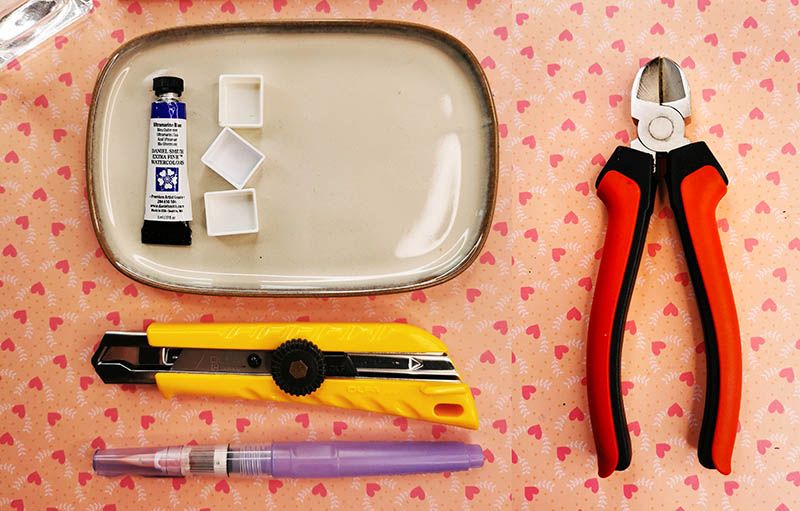
Useful Tools – Picture by Amylee
★ ★ ★ GOOD TO KNOW ★★★
You can find a great range of paints in GreatArt store in Shoreditch (London) or on GreatArt.co.uk online shop.
Dry Tube of Watercolour Paint | The Recipe
STEP 1:
- Take your tube of dry paint, then using a cutter or a pair of scissors cut the base of the tube.
- Then use your fingers to pull apart the plastic or metal casing of the tube to remove the dry paint.
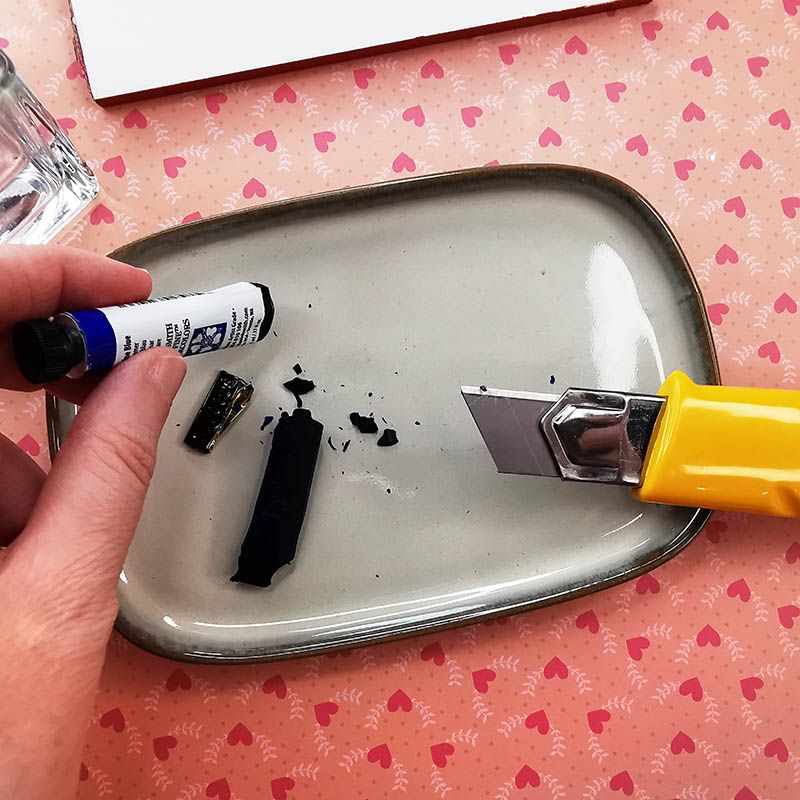
Amylee’s picture
STEP 2:
– Before cutting, always check the dimensions of the plastic pan to make it easier to fit the piece of dry paint in. Then use the cutting pliers to cut the cylindrical mass of paint.
★ ★ ★ GOOD TO KNOW ★★★
The remaining paint can be stored in a dry place. I like to wrap them with wax paper, which is usually used in baking. This silicone-coated paper does not stick and protects quite well from humidity.
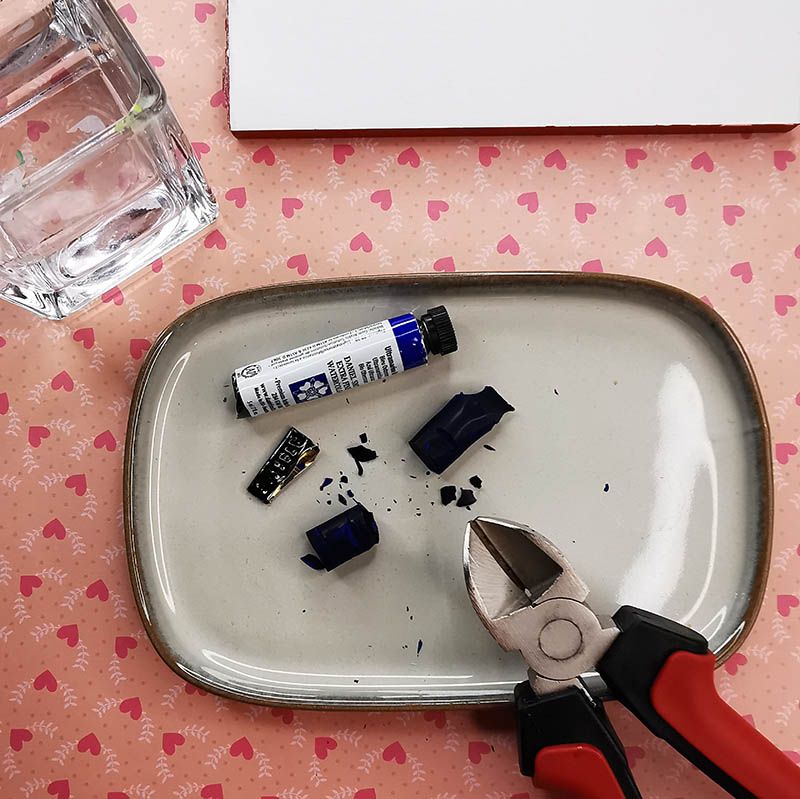
Amylee’s picture
STEP 3:
- Once the piece is cut, insert it into an empty ½ pan.
- You can now reactivate the watercolour paint by wetting it with a brush.
- This small pan can now go to your watercolour box containing similar pans. There you go!
Demonstration at Amylee’s studio
With this small “Eco responsible” gesture, dry paint finds a second life!
Don’t throw away your old dry tubes of watercolour paint, they can still be used for a long time. The proof is in the pictures in this article.
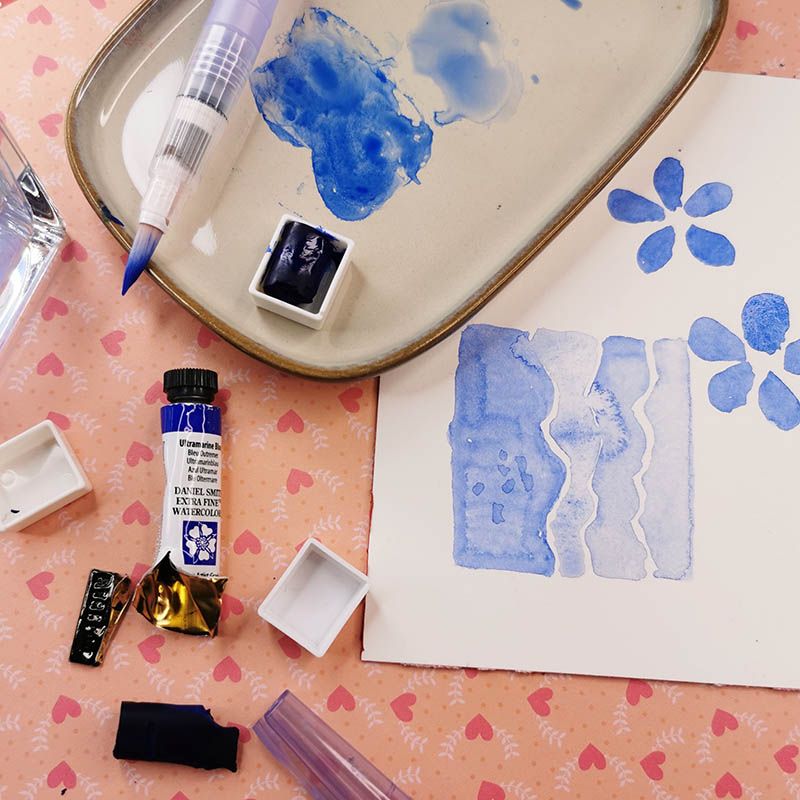
Amylee’s picture
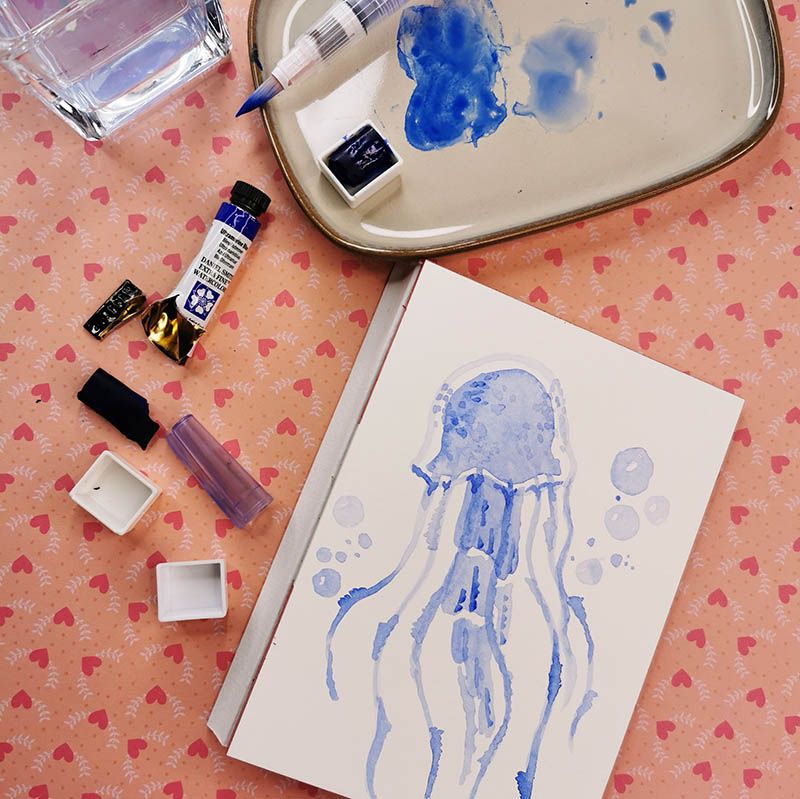
Amylee’s picture
Content provided by AmyleeParis
The passion of Amylee, fine artist and author is to share her paintings between galleries, art collectors and her community. Amylee is also recognized as one of the most influential French artist-entrepreneurs. Since 2009 she has mentored thousands of visual artists guiding them to thriving their art career.
★ ★ ★ ★ ★

You can visit her colourful portfolio, her Instagram, or find all Amylee’s posts published in GreatArt online Magazineby clicking here!
Plus de matériels pour artistes avec Le Géant Des Beaux-Arts sur :





Add comment